

Not everybody likes to listen to their music from mobile phones and tablets. Some audiophiles are still fascinated by the vintage amps from the old times available on online listings from time to time. Pioneer receivers from the 70s and 80s are some of the most exquisite stereo gears you can buy.
Pioneer SX 650 is one of the classic mid-range receivers made in the 70s. It is a great choice for those with an average-sized listening room. The amp is not uncommon and can be easily found for value prices. In this post, let us try to take a closer look at this vintage Pioneer receiver to find out what you can expect from it.
Table of Contents
Pioneer SX 650 Review – UPDATED 2021
The Pioneer SX 650, introduced in the mid-1970s, was one of the most desired receivers in the market for those who expect impressive performance and exceptional features at an affordable price. It was then sold for about $300 and can be found today at affordable prices in the range of $150-$300 depending on the condition.

Pioneer SX-650 Stereo Amplifier
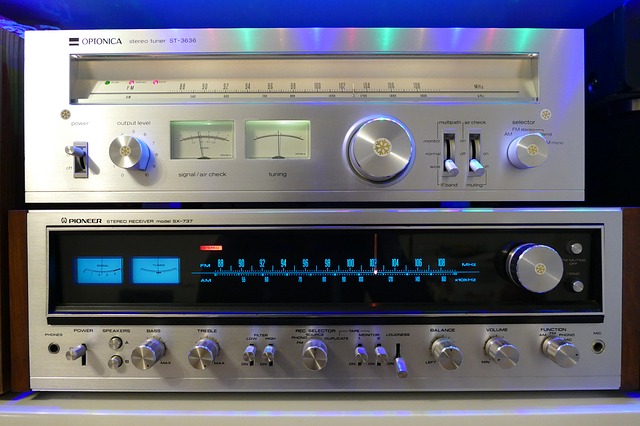
The vintage receiver is a clean and stylish gear with a classic silver face styling from the Pioneer 50s series and a wooden case. The power output is 35 watts per channel at 8 ohms which enables it to sound just right for a medium-sized area.
The Pioneer SX 650 measures 19x6x14.5 inches and weighs about 29 pounds. It features click-stop tone controls with center-defeat positions, tape-to-tape dubbing, a high filter, signal meter, FM muting, a phono input, tuning meter, aux/mic input, two tape in/outs, and more.
It is a cost-effective receiver that saves you money by leaving the frills to the expensive units and focusing on the real preamp performance with features like a quiet phono equalizer with a precision of +/-0.3dB and a big 200mV overload for a dynamic range.
Design
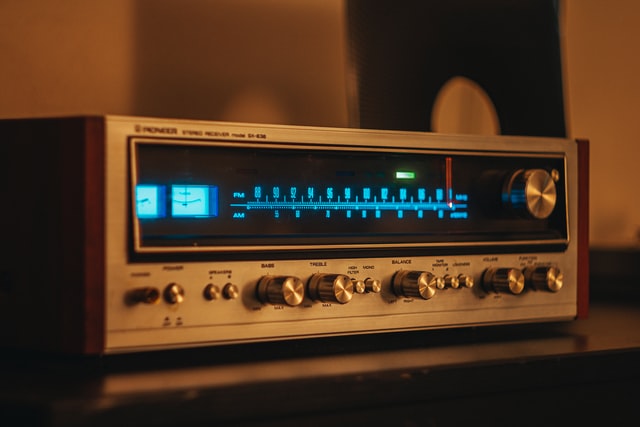
The Pioneer SX 650 is built to be a sturdy unit with a walnut-grained vinyl top and side panels and a glass front panel designed to provide amazing operating convenience. The large tuning scale facilitates better readability and precise tuning of frequency.
The front panel contains a tuning knob for the selection of AM and FM stations, speakers switch that functions as a speaker selection and a power switch, bass and treble controls, volume and balance controls. All these knobs feel classic and require finger strength to use.
There is a power indicator lamp on the front, stereo indicator lamp, signal meter, and FM tuning meter to give you an idea of the receiver’s status. Right on the front, you can find the phone plug to insert headphones and a mic jack that accepts a standard microphone plug.
The SX 650 also provides a high filter switch, loudness switch, mode switch, tape monitor switches, and FM muting switch on the front panel. The receiver offers various inputs and outputs at the rear along with an antenna connection.
Sound Quality
When used with high-quality speakers, the Pioneer SX 650 delivers detailed music with somewhat cold vocals. Adjusting the treble and bass controls should help you achieve the desired sound. The highs and mids are clean but the bass lack some punch. The receiver shows no distortion at loud volumes.
Pioneer SX 650 Receiver – A Complete Guide
The Pioneer SX 650 is a mid-range stereo receiver with high FM sensitivity and selectivity, a special IC for AM and PLL multiplex to deliver amazing stereo separation.
FM Tuning
The FM tuner section of the amplifier consists of junction type FET and high-precision variable capacitor for a stable operation. The integrated circuit and ceramic filters prevent mutual intervention and ensure high reliability and low distortion.
The crystal-clear FM reception tuner satisfies the most demanding requirements in terms of SN ratio, sensitivity, image rejection ratio, station drift, and capture ratio.
Low Distortion, Wide Power Bandwidth
The receiver delivers a continuous power output of 35 watts per channel at 8 ohms with no more than 0.3% harmonic distortion from 20Hz to 20,000Hz.
This high-power output over a wide bandwidth with low distortion is facilitated by the use of a first-stage differential amplifier.
Pre-Amplifier Design
As the device uses a differential amplifier in the first stage, the input impedance variations are minimized. It also delivers a phono input capability of 200mV with minimum distortion to ensure reliable production of records over a wide, dynamic range.
CR-type tone controls with center defeat knobs are used in the amplifier selection. When both the bass and treble controls are in the OFF position, the tone control circuit is bypassed and flat frequency response is delivered.
High Reliability
The power relay and protection circuit are designed to open the output circuit instantaneously in case of short or current surges. This feature prevents any damage to transistors or speakers and avoids any click noises during operation.
Auxiliary Features
Two tape monitor switches facilitate selective recording from one tape to another when two tape decks are simultaneously connected to the receiver. It is therefore possible to record from a tape deck to a cassette and vice versa.
A high filter switch eliminates high-frequency noise occurring due to scratches on the record.
Stereo System Set Up
The Pioneer SX 650 is a stereo amplifier with an integrated AM/FM tuner. It can be used in combination with external speakers or tape decks or turntables to create a complete stereo system for hours of listening experience. It also works as a public address system amplifier when paired with a microphone.
The SX 650 comes equipped with two sets of speaker terminals to allow connecting multiple speakers at the same time. There is also a MM type input to facilitate connecting the turntable for a stereo setup. The receiver also has aux terminals by which you can connect a television sound tuner, a second tuner, or a cartridge tape. The Volume and Bass/Treble controls can be used to adjust the sound to your preferences.
The receiver also provides two sets of recording input jacks and two sets of playback input jacks along with a TAPE 2 REC/PLAY connector. This not only allows normal recording and playback functions but also facilitates simultaneous recording on two tape decks as well as recording between two tapes.
Antenna
The Pioneer SX 650 provisions FM/AM antenna to improve the strength of received signals. A ferrite bar antenna on the rear panel can be adjusted to receive the best strength when listening to AM broadcast. If the antenna reception is poor, a vinyl insulated indoor or outdoor antenna can be connected to the AM antenna terminal on the receiver.
An antenna can also be set up for FM signal reception depending on the quality and strength of the FM transmission and interference from buildings and mountains. A T-type indoor antenna can be connected to the receiver terminal to avoid interference from nearby buildings. An outdoor antenna can be used in areas with high traffic or heavy interference.
Pioneer SX 650 Specs
Power output – 35watts per channel at 8 ohms
Total harmonic distortion – 0.3%
Frequency response – 10Hz to 50kHz
Input sensitivity – 2.5mV phono, 7mV mic, 150mV aux
Damping factor – 30
Signal to noise ratio – 70dB(MM), 65dB(stereo)
Speaker load impedance – 4ohm
Power requirement – 120V
Dimensions – 480 x 149 x 371 mm (WXHXD)
Weight – 13.1kg
Pioneer SX 650 Vs 750 – How They Compare?
Pioneer SX 650 and SX 750 are both classic mid-range receivers produced by the brand in the 1970s. The two units resemble a lot in terms of design, featuring a silver faceplate and wood case. They share a number of features including tuning and signal meters, FM muting, phono/aux/mic inputs, high filter switch, and more.
The input/output terminals and circuits for the tuner and preamp section are located on a large circuit board in both these receivers. This facilitates using unshielded cables and results in a better overall tonal quality. The performance and sound quality of the two preamps are quite similar except for the power output.
The first difference between the two units is the output power. The SX 750 is more powerful and delivers 50 watts per channel at 0.1% harmonic distortion as compared to the 35watts of SX 650. The two receivers also differ in weight and dimensions and have some design differences. Both the units have a protruding base on which the input and output connectors and speaker outputs are situated.
The Pioneer SX 750 was priced a little higher at $400 when introduced in 1976 as compared to the price tag of $300 for SX 650. However, it is easy to find both these receivers today at affordable prices starting from $100. You can expect to pay up to $300 or even more for well-restored units.
Conclusion
The Pioneer SX 650 is a powerful classic receiver ideal for those who are interested in vintage audio. It comes with a sturdy build, a wide range of controls, input and output options to provide a nice listening experience in a medium-sized room. It is affordably priced and provides a good value for money.

