

Got yourself a new pair of bookshelf speakers but then realize you don’t have enough space for them and decided to put them on the floor. We highly suggest you don’t do that as this will degrade the sound quality and ruin your music listening experience. We will be explaining to you why you shouldn’t place your bookshelf speakers on the floor and what are the better ways to position them inside your listening room.
If you haven’t bought the bookshelf speakers yet, you can use the information here to find out where and how you should place/position them. Alright, so let us start.
Table of Contents
Why you shouldn’t place the Bookshelf Speakers on the Floor
By placing these bookshelf speakers on the floor, you will make them sound more bass-heavy and most models will actually sound boomy. You will miss hearing music details as well as the highs and mids are not properly directed to your ears, not to mention, the lower frequencies also overshadow the treble due to the reinforced bass. The floor surfaces are reflective whereas some types are even more so, for instance, polished marble floors. Walls are also considered reflective surfaces, if you plan on placing them on the floor at the corner of your room, the low-end reproductions would certainly sound boomy, and even though you may feel more presence due to higher bass frequencies output, the soundstage is more than likely have shrunk. The music presentation also doesn’t sound natural and the stereo imaging is inaccurate.

You will not be getting the best performance from your stand-mounters with these speaker placements thus not getting your money’s worth. Even if you bought your bookshelf speakers at a very affordable price, the sound quality can still be better with the right speaker placements and positioning. There is also a hazard of putting your bookshelf speakers on the floor where you may trip over them if they are out in the open. The tweeters of your bookshelf speakers should always be leveled close to your ears’ height when you are in a sitting position (sweet spot). Now you can imagine, by placing them on the floor, how far off the tweeters’ positioning are and how many details you are missing out by doing so.
If you are planning to integrate a subwoofer into your sound system so as to get deeper and more powerful bass reproductions, we will advise you to hold off the idea until you are able to solve the bookshelf speakers placements issue. You can also take this opportunity to read up about the best subwoofers for small rooms on our site. We have provided solutions on how to resolve this issue and you can check them out by continuing to read.
Solutions to Resolve the issue
One of the best solutions is to get high-quality speaker stands for your bookshelf speakers. By using speaker stands, you can elevate the speakers’ tweeters to your ears’ height and also position them away from walls. You should immediately hear the improvements in sound quality after setting this up properly. How much distance away from the walls will depend on your preference, you could experiment until you find the ‘right’ distance for yourself. Both left and right speakers should have equal distances away from the walls and roughly around 6 feet apart (1.8m). The distance apart can be more and is depended on the speaker manufacturer’s recommendation on that specific model. You can read up about speaker stands for KEF Q150 to get an idea of the different stand types which you can go for.
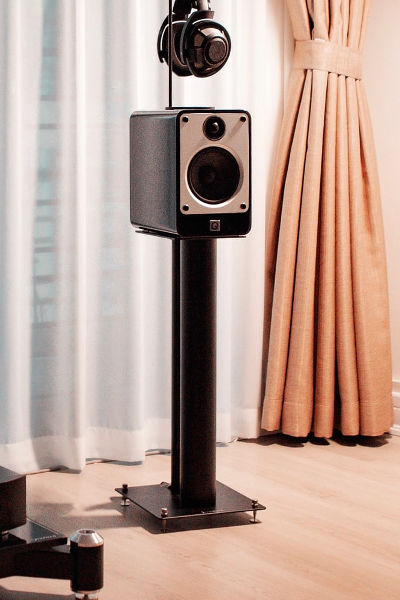
If you are planning to place them on your desktop or furniture, you should get a pair of desktop speaker stands or at least isolation pads to decouple them from the supporting surface. The floor surface near your bookshelf speakers’ positions should be covered with a carpet if possible. Listeners who have no choice but to place their speakers in the corner of the room and find them sounding boomy might want to use foam port plugs (provided by the manufacturer). These speaker foam port plugs will block airflow and ‘change’ the stand-mounters into a sealed design. You can also try acoustically treating your listening room. The last resort is probably to make room for your bookshelf speakers so that they could have better placements and positioning using speaker stands.
To Conclude
We hope you are now enjoying an improved music listening experience with higher sound quality after using the information and solutions provided here. If your bookshelf speakers are brand new, it will take some time for the speakers to break in. Once they are broken in, you might want to try repositioning them again or leave them as it is if you still find them to sound really good. Some bookshelf speakers have their own dedicated stands such as the Q Acoustics Concept 20. You should check yours to see if they have their own dedicated speaker stands and use them instead of others.

