
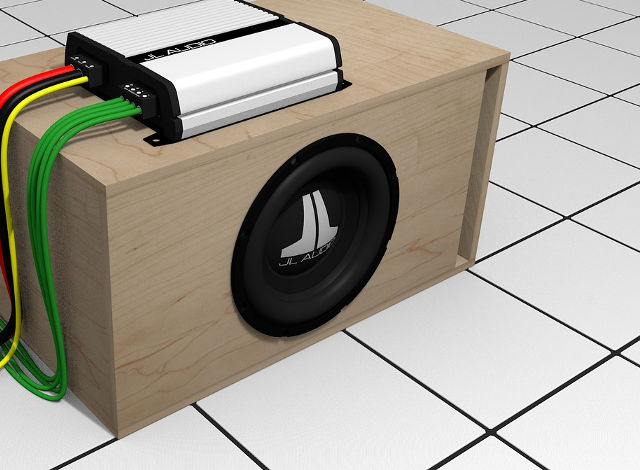
If you are willing to invest in a high-quality subwoofer and interested to know the difference between a good and bad subwoofer then you are in the right place. Integrating a good subwoofer will help enhance your sound quality and improve your listening experience. A bad subwoofer on the other hand may help to improve the bass output but the listening experience will deteriorate due to lowered sound quality.
Do make sure you have enough space to accommodate a subwoofer since it will take up a permanent spot in your room and you wouldn’t want the sub to stick out or block a pathway. Typically, a sub should be placed at the corner of your room but we suggest doing a subwoofer crawl first to find the most optimal placement. If available space isn’t an issue then let us begin.
Table of Contents
What is a Good Subwoofer
A good subwoofer should be capable of improving your sound system not just by delivering lower frequencies that your speakers are unable to produce. The bass must have quality and not just simply dishing out bloated low ends. A good subwoofer needs to deliver powerful and impactful subterranean bass when it needs to and with accuracy. It needs to sound realistic and precise for both music and movie sources. Another aspect of a good subwoofer will be that you wouldn’t notice the LFEs coming from the sub itself. The bass produced by a good sub should integrate seamlessly with your speakers’ sound reproductions and make them sound full-range.
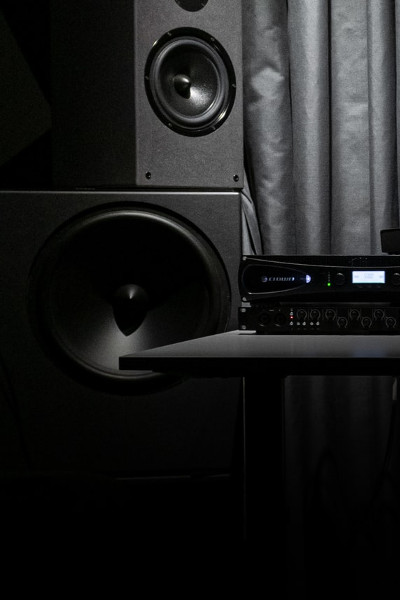
The precision of the subwoofer is important and so is power. Compared to finding out the bass quality of a sub, knowing its power output is a lot easier. Usually, the higher the Watts the better as this allows more headroom for the subwoofer to handle the peaks, especially in movies as they could suddenly go very loud. With more power, you can push the subwoofer to higher volume levels. You can increase power by adding another sub into your sound system. The dual subwoofer setup will give you more headroom to play with and this also helps to cover more areas in the room, giving you a more even bass distribution.
Listeners who prefer to have only 1 subwoofer, might want to go with size instead. This means if you have a larger listening room, you should go for a bigger-sized subwoofer. For large listening/HT rooms, you should aim for subwoofers with a 15″ driver or higher. There are subwoofers that come with dual bass drivers and would work better than a sub with a single driver of similar size.
What is a Bad Subwoofer
A bad subwoofer will sound sluggish and boomy, the type of bass quality that will give you a headache after listening to it for too long. You will also notice the bass frequencies coming from your sub which will break the immersion and illusion. Low power is one of the usual attributes of a bad subwoofer too. A sub with low peak power will have a higher chance of bottoming out and this will ruin your listening experience quite instantaneously. There is also the possibility of unwanted port noises coming from the subwoofer. If this is a concern, you might want to stick to sealed cabinet subwoofers.
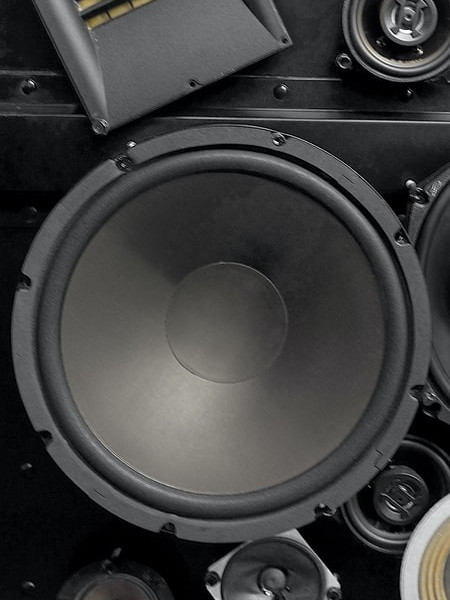
Due to their low power output, the subwoofer might not sound loud enough for the user. Pushing such a sub too hard might damage it. This is why we highly recommend not to go wild on budget subwoofers.
What makes a Good Subwoofer Bad
Your own needs and other requirements play a big part in this. For instance, you have a small listening room but you decided to get a large-sized subwoofer, this will not be suitable as it will overwhelm the upper registers. You might want to get a small subwoofer for your small room instead. A subwoofer may have the bass quality but is unable to deliver deep enough low frequencies which you want, this will turn a seemingly good subwoofer into a bad one. You should set a requirement on how deep into the bass extension you want the sub to reach.
There are also listeners who prefer higher bass output and louder volume, then you might want to get a high-powered ported cabinet subwoofer with a large bass driver. The room acoustics will affect the performance of your subwoofer and might make a good subwoofer sound bad. You should use room correction technologies like Audyssey to calibrate your speakers together with your subwoofer. Some subs do have their own automatic calibration software. If you do not have such software available to you, treating the room acoustically or doing a subwoofer crawl will be the next best option.
If music is your main entertainment, you should aim for a sealed cabinet subwoofer as it has a tighter, more agile, and articulated bass delivery than a ported sub of the same price range. These are some of the factors that will make a good subwoofer sound bad and if you have a tight budget, you might want to lower your expectations as well.
To Conclude
We recommend checking out brands that make subwoofers for a living and who are really good at what they do. Companies like SVS, Rythmik Audio, HSU Research, JL Audio, and Ken Kreisel just to name a few. You can stick with your speakers’ brand if you want to but their performance and value may not be up to par with the aforementioned companies.
It will be safer to go for a large-sized subwoofer with a big bass driver and high amplifier power if we just look at specs alone. You should have a listen first before making your final decision as you will need to find out if the subwoofer has the bass quality and output you want. Integrating more than one subwoofer into your sound system would usually be better when it comes to performance.

